Featured

A Ghost That Can’t Count

During the metropolitan exams of an imperial examination1 of the Yongzheng2 Emperor’s reign, a young man with the surname of Tang had a female ghost with dishevelled hair breaking in his booth in the middle of the night. 

She tore his examination paper into pieces that flew all over the place like butterflies. 

Tang, a man of righteousness and courage, maintained his cool. 

“Whatever happened in my previous life is unknown to me,” he sat straight and said. “I have never done any harm in this life as far as I know. Why did you mess with me then?”

The ghost looked quite confused. “Are you not number 47?” She asked.

“I’m number 49,” Tang said.

It turned out that the ghost skipped two vacant booths and miscounted.

She stared at Tang for a while, and sincerely apologized before she left.

A moment later, an eerie shriek came from the number 47 booth. Later it was announced that the person was bewitched and suffered from sudden illness. 

–From Ji Yun’s Notes of the Thatched Abode of Close Observations (The Qing Dynasty)

________________________________________________

1. Metropolitan is the second of the three major levels the Ming dynasty’s and the Qing dynasty’s imperial examination used to select government officials.

2. The Yongzheng Emperor (12-13-1678 – 10-8-1735) was the fifth emperor of the Qing dynasty.

________________________________________________

For more ancient Chinese strange tales, feel free to check out Head Flyer and 100 More Ancient Chinese Strange Stories

40000 in Debt

Minister of War, Mr. Wang1 in Xincheng2 had a head butler who was quite well-off. 

One night, in the butler’s dream, a man ran to him and said, “You owe me 40,000 qian3 and now it’s the time to pay me back.” The butler tried to ask for more information, but the man said nothing more and disappeared.

After he woke up, he learned that his wife had just given birth to a baby boy. He couldn’t help but wonder if the baby was the same man from his dream. If so, the man might have come to collect his money. 

The butler set aside 40,000 qian in a designated room and ordered that from then on, everything the family needed for the boy had to be purchased with money from the specific stash.

When the boy was about 3 or 4 years old, there were only 700 qian left. 

One day, the nanny took the boy over to the butler so he could play with the kid. The butler said to his son, “That 40,000 is almost gone. I guess this is about as far as it goes.” 

The boy all of the sudden put on a totally different face and jerked his head back, eyes wide open. The nanny and the butler checked on him immediately, only to find him dead. 

What’s left of the money turned out to be the exact amount needed for the boy’s funeral.

Long time ago, some heirless old man asked a highly respected monk how he ended up childless. The monk said to him: “You don’t owe anyone, and no one owes you anything. How can you have kids then?” According to the monk, if you have good children, they are here to pay you back for something nice you have done for them; if you have one that brings you tons of headaches, it’s because you owed them in the past life, and you need to pay them back. In summary, don’t get too excited about having children in your life. On the other hand, if you lose them, don’t get overly sad, either.

–From Pu Songling’s  Strange Tales from a Chinese Studio (The Qing Dynasty)

_______________________________________________

1. Wang Xiangqian, a real minister in the Ming Dynasty.

2. Old name for a town in Shandong province.

3. An ancient Chinese currency unit in the form of a copper coin with a square hole. 1000 is one Guan.

____________________________________________

For more ancient Chinese strange tales, feel free to check out Head Flyer and 100 More Ancient Chinese Strange Stories
Five-Colored Jade and Frozen Bodies

b833b9898877e83bdb1b41c0dacdff61.jpg

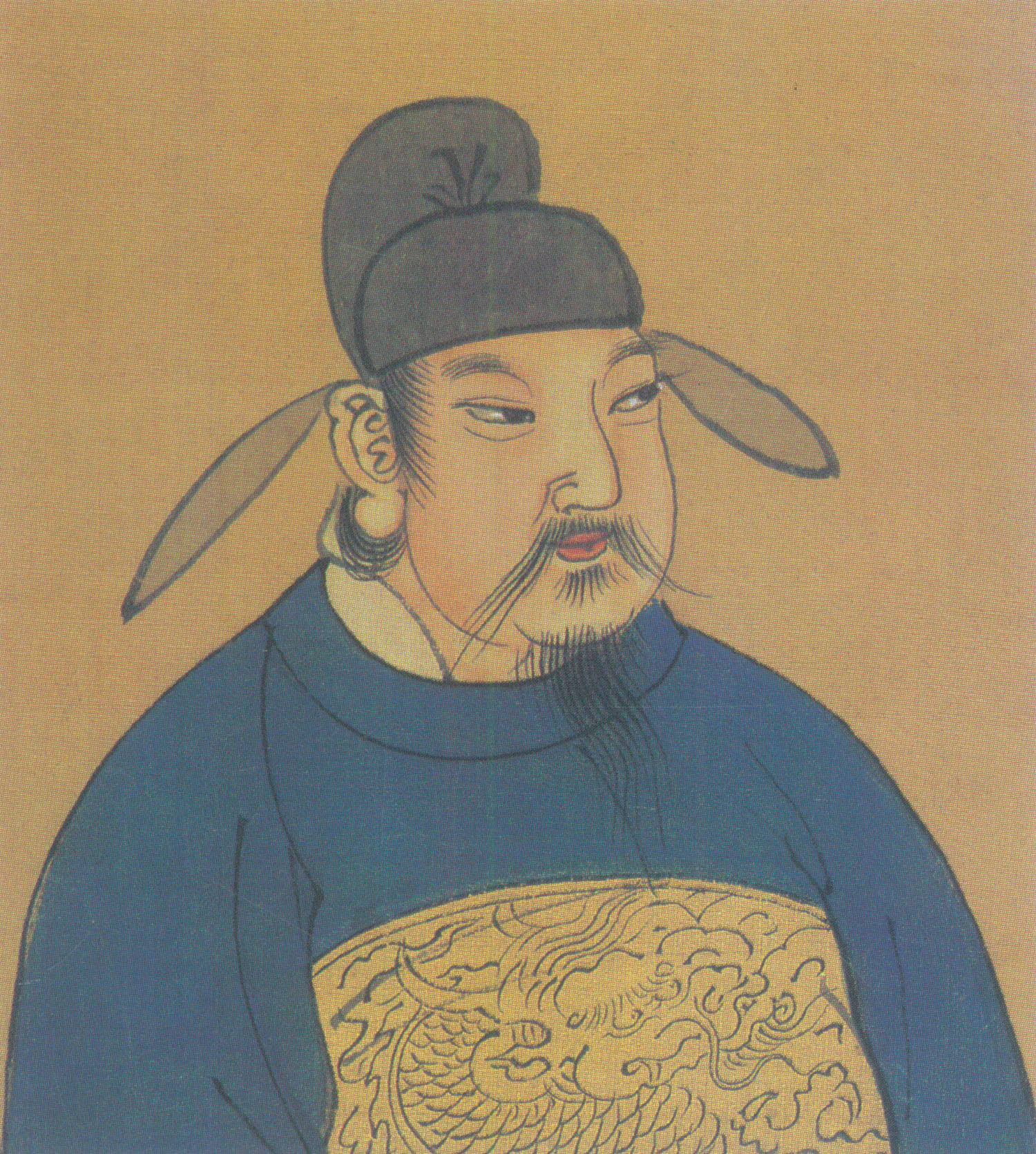
Emperor Xuanzong of Tang, the emperor in the plausible story


During early years of Tianbao, General An Sishun presented a belt made of a kind of rare jade called jade of five colors to the emperor. The emperor loved it. He then commended to look for more five-color-jade items, but all they could find was a cup in the left part of the royal inventory.

The emperor, a little upset, wondered why there was not much tribute of five-color-jade items in recent years.  He then sent out his men to ask vassal states in the west. When the messengers came back the emperor then learned that they did try to make tribute of five-color-jade to the Tang Empire, but there was this tiny country called Small Bolu that frequently sent out armies to rob their caravan, and that was why the emperor did not get them.

The emperor was outrageous at the news and wanted to send troops to teach Small Bolu a lesson. Most chancellors tried to convince him that it was not a good idea, except the prime minister Li Linfu who said he could not agree with him more suggested that general Wang Tianyun was the best man for this mission.

Wang Tianyun later set off with an army of over 40,000 for the west, where together with armies from other vassal states, they marched towards Small Bolu. The king of Small Bolu, intimidated, begged for forgiveness and was willing to give Tang and its allies all the treasure in the kingdom, including all the five-color jade. General Wang Tianyun refused and led his men into the country, who slaughtered a lot of civilians, and took all their treasure along with about 3000 survivors as captives.

A shaman in Small Bolu said, “The general has no sense of justice but full of cruelty. This soon shall bring disaster in the form of snow storm.”

The troops marched for about 20 miles when severe snow storm came out of nowhere. The snowflakes swept like numerous wings, with the wind bashing the lake, which instantly turned it into giant ice cones before breaking into pieces in the storm. The storm went on for half a day, and the lake was overflown with ice and water. All the 40,000 officers and soldiers were frozen to death except two: one from the Tang Empire which happened to be General Wang Tianyun, and the other from one of the vassal states.

The emperor found the news so strange and unbelievable that he sent out two envoys to check it out. When the two finally arrived at the spot, they saw that the bodies of the soldiers, sealed in ice, still looked like when the storm occurred.  Stunned by the scene, the envoys managed to collect themselves and head back. As they turned around on their way for the last time, the ice suddenly melted away and all the bodies disappeared.

——————————————-

Translated from a story in Youyang Zazu (Miscellaneous Morsels from Youyang) by Duan Chengshi (Tang Dynasty)

More stories are available in my book Head Flyer and 100 More Ancient Chinese Strange Stories at: https://a.co/d/6gZruWM
Dancing Corpse

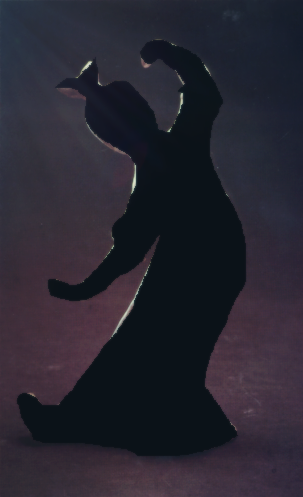
dancing zombie_副本


A Hermit named Zheng Binyan used to live in Hebei province. The head of village he stayed at just lost his wife, and the corpse was not coffined yet.

By sunset, their children started hearing faint music. The music became louder and louder, as if the music itself was able to walk. As the music came to the front yard, the dead body started moving too.

When the music arrived at the room of the body and started resonating around the beam and pillars, the corpse got up and started dancing.

The music then left the room, followed by the body, and went away.

It was completely dark by that time and it turned out to be a moonless night. The family was then too scared to go after the dancing corpse.

The widower only learned about it later that night when he finally got home wasted. The drunken man burst into rage upon the news, broke off a mulberry branch as thick as one’s arm, and went out in search for his wife, cursing.

After walking down about two miles in a cemetery, he finally heard the same music coming from a cypress forest. As he approached, he saw his dead wife dancing under a tree surrounded by faint but bright flame.

The widower wielded the mulberry branch right at the corpse; the music stopped and the dead woman instantly fell. The head of the village then picked up his wife’s dead body and walked his way back.


——————————————-

Translated from a story in Youyang Zazu (Miscellaneous Morsels from Youyang) by Duan Chengshi (Tang Dynasty)

More stories are available in my book Head Flyer and 100 More Ancient Chinese Strange Stories at: https://a.co/d/6gZruWM
The Ferry Goddess of Jealousy

0020033090734704_b

Back in Jin dynasty during the years of Dashi*, a man named Liu Boyu had a wife whose maiden name was Duan and her courtesy name was Mingguang (meaning bright light).

Mingguang was very jealous. Boyu used to read poem Ode to the Goddess of Luo River and say something like, “If only I could have the Goddess of Luo River (Luo Shen) as my wife! Then there would be nothing else I want in my life!”

Mingguang could not take it anymore and asked, “You would choose a fictional goddess over me? How about I die? Huh? Then no doubt I will be a goddess too!”

On that night Mingguang jumped into the river near by and killed herself.

Seven days after Mingguang died, she appeared in Boyu’s dream at night, saying, “You wished to marry a goddess. Your wish came true. I am a goddess now.”

Boyu was scared and woke up. He never got anywhere near the river the rest of his life, not to mention taking a ferry.

The ferry of the river though, started to have strange effects.

Whenever a good-looking lady wanted to go across the river, she had to make a total mess of herself by damaging her clothes and making her make-up and hair as untidy as possible. Otherwise, the whole boat would suffer from sudden and outrageous storm which would nearly scare everyone on board to death.

In the case of plain or even ugly ladies, however, no matter how dressed-up she was, the river wouldn’t bother to even stir a bit, as Mingguang the goddess was not jealous.

Therefore, ladies who could not cause any storm on the river were considered unattractive. As a result, women who were not confident of their appearance would also mess up their look to avoid this kind of embarrassment.

There then came a saying: “To find out if your girl is a true beauty, take her to the ferry; if there is a storm, she fits the goddess’s norm.”

——————————————-

Translated from a story in Youyang Zazu (Miscellaneous Morsels from Youyang) by Duan Chengshi (Tang Dynasty)

*c. 265-274

More stories are available in my book Head Flyer and 100 More Ancient Chinese Strange Stories at: https://a.co/d/6gZruWM

Painted Horse Coming to Life

Han_Gan_Herding_Horses
Man herding horses Painting by Han Gan
During the early years of Jianzhong, someone took a horse to a vet specializing in horses, claiming that there seemed to be something wrong with one the horse’s hooves. He also offered to pay 20 coins to have it cured.
The vet had never seen any horse with such bone structure or fur color, so he laughed and said, “This horse looks more like those Han Gan* the artist painted than real horses!”
He then asked the person to walk the horse around the market with himself following.
Han gan happened to be in the neighborhood and saw them.
“This horse really looks like one of my paintings!” Han said, quite surprised. He checked his art works as soon as he got home, when he found a horse on one of the paintings that looked exactly like the one he saw at the market. On one of its hooves there was a small ink dot that might have been an accident. Han then knew for sure it was the spirit of his painting that he saw.
Later on, all the coins the vet got, after going through several receivers, turned into fake coins made of clay.

—————————————————————
Translated from a story in Youyang Zazu (Miscellaneous Morsels from Youyang) by Duan Chengshi (Tang Dynasty)

* Han Gan (c. 706-783): famous artist in Tang Dynasty.

More stories are available in my book Head Flyer and 100 More Ancient Chinese Strange Stories at: https://a.co/d/6gZruWM